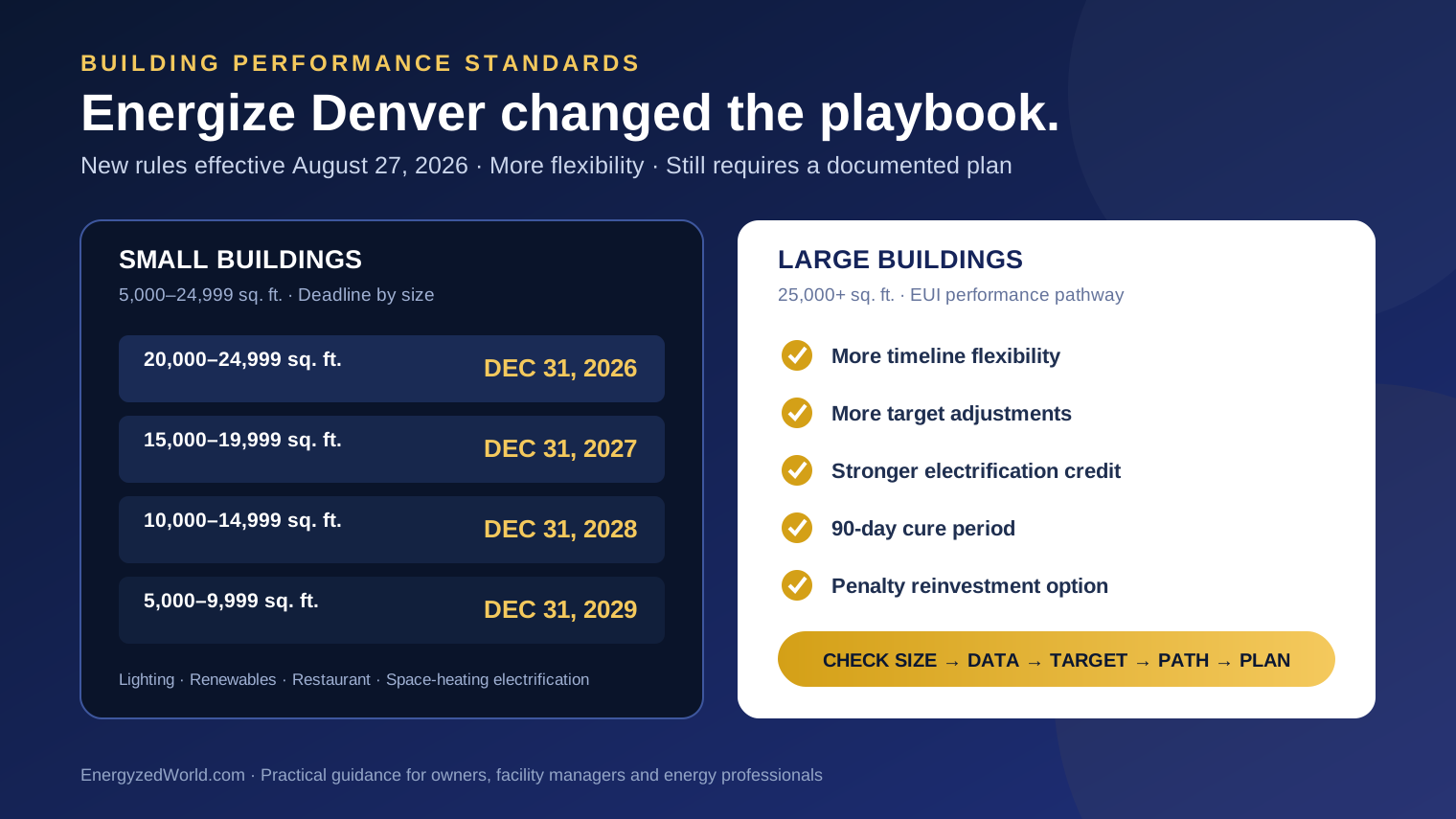
Denver did not remove compliance. It changed how owners can reach it.
The most important sentence in the new Energize Denver rules is not about a fine. It is about choice.
On August 27, 2026, the City and County of Denver adopted updated rules for its Building Performance Policy. The changes add time, clarify enforcement, expand target adjustments and create more realistic compliance pathways for buildings whose operating, financial or capital-planning conditions do not fit a standard template.
That is good news for building owners. It is not permission to wait.
A building can have more flexibility and still lose it by carrying inaccurate ENERGY STAR Portfolio Manager data, working from an old deadline, missing an application window or failing to document progress. The practical job now is to determine which pathway fits the building before committing capital.
First: identify which set of requirements applies
Energize Denver covers commercial and multifamily buildings in Denver beginning at 5,000 square feet, but it regulates two size groups differently.
| Building group | Core requirement | First management question |
|---|---|---|
| 5,000–24,999 sq. ft. | Prescriptive or approved alternate pathway | What is the deadline for this size band, and which pathway requires the least disruption? |
| 25,000+ sq. ft. | Annual benchmarking and an EUI performance target | Is the Portfolio Manager data correct, and is the assigned target realistic? |
| MAI buildings, 25,000+ sq. ft. | Performance or approved MAI pathway | Can process load be separated and measured well enough to support the selected metric? |
The city is also explicit about what the policy is not. It is not a blanket electrification mandate. It does not require every building to reduce energy use by exactly 30%. It does not automatically force the early replacement of every gas-fired HVAC system.
Those distinctions matter because the best compliance strategy may be operational improvement, equipment efficiency, a target adjustment, renewable energy, electrification at end of life or a phased combination.
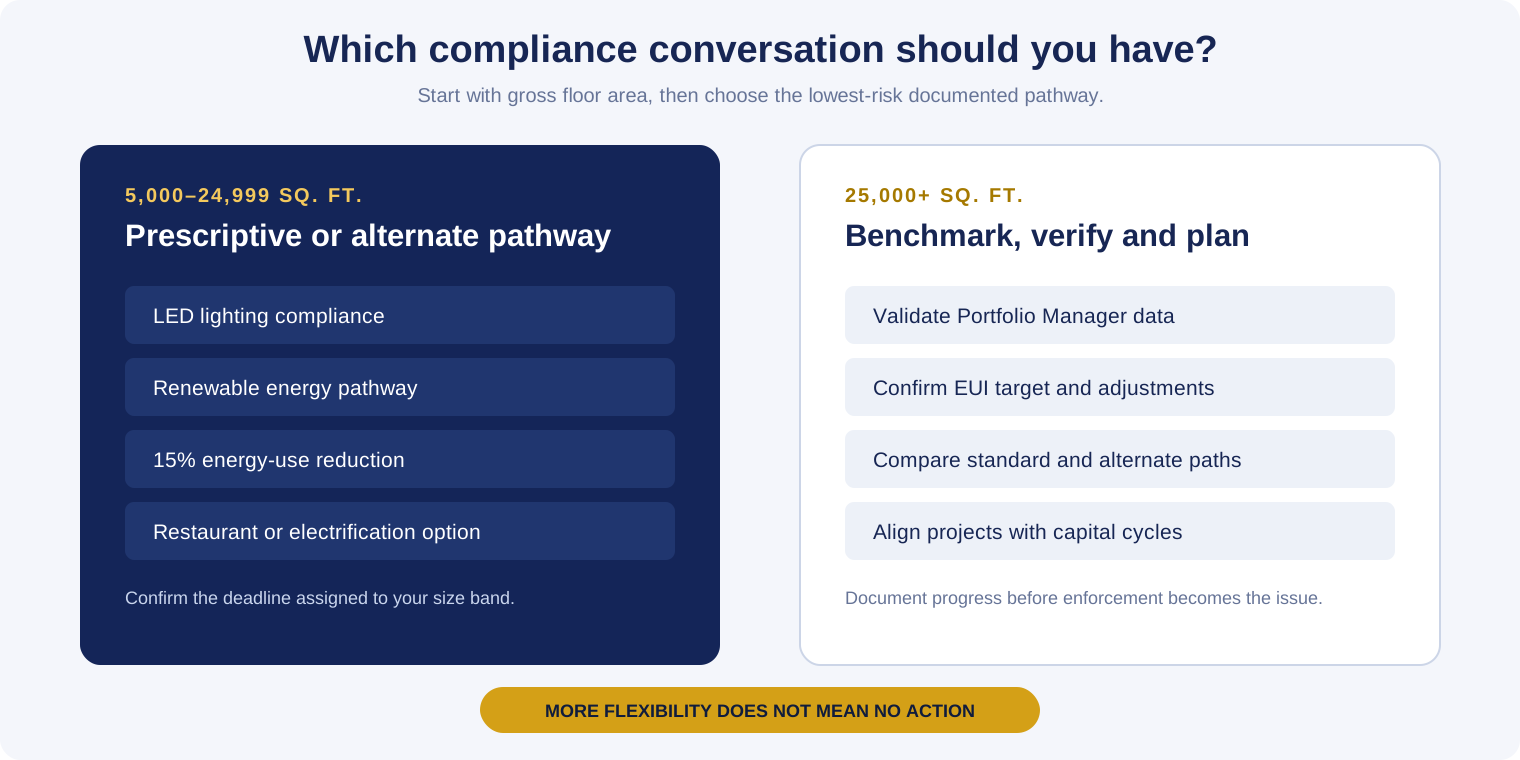 Start with building size, then compare the available pathways against the building’s actual data and capital cycle.
New Energize Denver deadlines for buildings under 25,000 square feet
The clearest immediate change is the small-building schedule.
| Gross floor area | Compliance deadline |
|---|---|
| 20,000–24,999 sq. ft. | December 31, 2026 |
| 15,000–19,999 sq. ft. | December 31, 2027 |
| 10,000–14,999 sq. ft. | December 31, 2028 |
| 5,000–9,999 sq. ft. | December 31, 2029 |
The previous December 31, 2025 deadline was shifted, and the larger small-building group was split into two bands. The remaining deadlines moved back by two years.
Small-building pathways are broader and simpler
The 2026 update also:
- simplified documentation instructions for the lighting and renewable-energy pathways;
- removed pre-applications from the alternate-compliance process;
- removed the renewable-energy requirement from the residential-condominium option;
- added a restaurant alternate compliance option focused on kitchen equipment;
- added an electrification option focused on space-heating equipment.
Self-verification for a building that already meets the LED requirement remains an important tool, but owners should distinguish that earlier 2025 change from the new 2026 amendments. Under current guidance, a self-verifying building generally documents at least 97% LED fixtures. A building using a lighting professional can also demonstrate compliance based on lighting load or fixture count, subject to the applicable documentation rules.
The strategic point is straightforward: do not automatically purchase renewable energy or replace every lamp until the building’s existing condition and the available alternate pathways have been checked.
What changed for buildings 25,000 square feet and larger?
For large buildings, the updates are less about one date and more about building a workable compliance plan.
1. Timeline flexibility is now more explicit
The rules codify the timeline shift already obtained by most large buildings and clarify extensions for benchmarking and data verification. They also add a capital-plan cycle option to the timeline-extension process.
That matters for owners who manage replacements through reserve studies, five- or ten-year capital plans, lease events or the end of HVAC service life. A credible compliance plan can now align more closely with when a major system can reasonably be replaced.
An extension is still an approval process. The owner needs evidence, dates and a plan—not a general statement that the project is difficult.
2. More buildings can pursue a realistic target
The updated framework includes or formalizes:
- approved use of 2018 or 2020 baseline years in qualifying cases;
- a restaurant target adjustment;
- exclusion of qualifying heated swimming-pool energy;
- a process to request a target capped at a maximum 30% reduction;
- alternative methodologies for developing a custom target;
- a custom MAI target for manufacturing, agricultural and industrial facilities;
- annual exclusion of qualifying transportation energy used by vehicles drawing energy from building utility meters.
This is where data verification becomes commercially important. If the gross floor area, operating hours, property use, meter coverage or excluded energy is wrong, the owner may be solving the wrong problem.
3. The electrification incentive is stronger
A covered building reaching 80% whole-building electricity may qualify for a 20% increase to its 2030 EUI target, subject to the detailed eligibility rules.
That is a target credit—not a claim that the building automatically saves 20% energy. Owners should model the effect on the target, utility cost, peak demand, electrical capacity and equipment replacement schedule before treating electrification as the preferred pathway.
Renewable-energy credits were also adjusted so qualifying short-term subscriptions can continue beyond 2032 under the stated limitations.
4. Buildings sold in Denver carry compliance information with them
Sellers must disclose the building’s compliance status. For covered buildings of at least 25,000 square feet, the outgoing owner must also transfer the ENERGY STAR Portfolio Manager property profile and the energy and space-use data needed for the next submission.
Energize Denver compliance is therefore part of asset due diligence. Buyers, brokers, lenders and property managers should ask for the compliance notice, DBID, benchmarking status, verified data, approved adjustments, extension documents and open enforcement items before closing.
Enforcement is clearer—and action before citation matters
The updated rules codify the reduced penalty structure and add several procedural safeguards.
A 90-day cure period
A building owner receives a 90-day cure period between a Notice of Violation and an Administrative Citation. That window can allow an owner to correct the issue, complete a missing submission or pursue an eligible extension or corrective-action plan.
Penalty reinvestment
Eligible owners who act quickly may request to reinvest performance penalties in the building instead of simply paying the entire civil penalty. The technical guidance ties this opportunity to prompt action after citation, including a key 150-day window.
This is not a discount for ignoring compliance. It is a last-chance mechanism designed to direct money into measures that improve the asset.
Pre-compliance decision review
The new review process lets an owner challenge certain factual or procedural decisions—for example, an incorrectly calculated adjustment or a denied extension that met the minimum requirements.
A review request generally must be filed within 30 calendar days of the decision notice. The September 2026 guidance also provides a transition window through December 31, 2026 for eligible decisions issued before August 27, 2026.
The data-verification requirement did not disappear
Buildings 25,000 square feet and larger must continue annual benchmarking through ENERGY STAR Portfolio Manager. The program also requires third-party data verification for the 2025 or 2026 reporting year, unless the requirement was already satisfied through an applicable prior process, and again when final-target performance is evaluated.
A useful verification should answer five questions:
- Are all whole-building energy meters included?
- Is gross floor area measured and reported correctly?
- Are the property-use types accurate?
- Do operating hours and space attributes reflect reality?
- Are eligible exclusions and target adjustments supported by evidence?
Verification is not paperwork for its own sake. A small input error can change EUI, distort the target and send the owner toward unnecessary capital work.
Denver and Colorado: one performance target, but not one filing
Energize Denver received state deemed-compliance status in January 2026 for buildings also subject to Colorado’s building-performance policy. This means compliance with Denver’s performance target can count toward the state’s performance requirement, including recognized Denver adjustments and extensions.
However, Denver owners subject to both programs still need to submit the required annual benchmarking information to both jurisdictions, and state fees can still apply.
Do not confuse target alignment with the elimination of reporting.
A practical five-step action plan
1. Confirm size and ownership data
Locate the Denver Building ID and confirm the gross floor area used by CASR. A boundary error around 25,000 square feet can move the building into an entirely different compliance regime.
2. Check the current notice—not an old spreadsheet
Confirm the assigned deadline, target, benchmarking status, data-verification status and any approved extension directly against the current Energize Denver record.
3. Repair the data before designing the project
Reconcile utility meters, Portfolio Manager entries, property uses, operating details and eligible exclusions. Do this before calculating the compliance gap.
4. Compare pathways financially
Model at least the standard path and the most plausible alternative. Compare:
- estimated EUI reduction;
- capital cost and operating savings;
- available utility rebates and tax incentives;
- equipment service life;
- electrical-service capacity;
- tenant and construction constraints;
- documentation and approval risk.
5. Put the selected pathway into the capital plan
Translate the compliance strategy into named measures, responsible parties, budgets, funding sources, milestones and reporting dates. A building is not protected by knowing that an extension exists; it is protected by an approved, actively managed plan.
The commercial takeaway
The 2026 rules make Energize Denver more workable. They reward accurate data, credible planning and early action.
For a facility manager, that means compliance should sit beside preventive maintenance and capital planning—not as an isolated annual filing. For an owner, it means the least-cost path may involve correcting the target before buying equipment. For an energy professional, it means the work is shifting from generic audits toward defensible building-specific roadmaps.
More flexibility is valuable only when it is converted into a decision.
Aim Dynamics supports Denver building owners with ENERGY STAR Portfolio Manager benchmarking, third-party data verification, ASHRAE Level 1 and Level 2 energy audits, EUI and target analysis, timeline-extension planning, retro-commissioning, energy monitoring, rebates and implementation roadmaps.
For an initial review of your building’s status, contact Chris Mbori at [email protected] or visit Aim Dynamics.
Official sources
- City and County of Denver: Energize Denver Building Performance Policy
- Energize Denver Rules and Regulations
- Energize Denver Technical Guidance
- Energize Denver Navigation Center
For examples of the work in practice, see AIM Dynamics’ anonymized Energize Denver energy-audit and compliance case studies, covering reporting reviews, target adjustments and lighting approval.