
AIM Dynamics helps Colorado building owners connect accurate benchmarking, practical energy audits and documented compliance decisions. These anonymized projects show how that work supports Energize Denver: resolving a reporting review, securing a justified target adjustment and taking lighting verification through to City approval. Further Colorado examples show how a building study, financing analysis and persistent waiver follow-up help owners choose their next step.
Project records reviewed October 9, 2026. Names, addresses, account identifiers, energy figures and project costs are withheld. EnergyzedWorld is an Eenovators publication; author Chris Mbori works with AIM Dynamics. Neither is the City’s Energize Denver program.
Start with the right Energize Denver requirement
For a building owner, the first question is practical: what needs to be resolved at this property?
The official Energize Denver Navigation Center separates covered buildings into 5,000–24,999 square feet and 25,000 square feet or larger. The applicable size group and compliance pathway determine the next steps. Colorado’s state benchmarking program is a separate program; an approval under one should not be treated as an approval under the other.
| If this is your problem… | Start here |
|---|---|
| A benchmark needs revisions | Reconcile utility data, meters and property information. |
| A target appears inconsistent with building use | Check the property record and the evidence for an allowed adjustment. |
| You need to plan energy improvements | Scope an audit around equipment, operations and the relevant target. |
| A small building needs lighting compliance | Verify the lighting and prepare the applicable documentation. |
| A capital project is difficult to fund | Compare full project costs, financing terms and conditional incentives. |
Use our Energize Denver rules guide for the wider framework, or look up published Colorado building records. A lookup is a starting point for investigation; the responsible program makes the compliance determination.
Three Denver projects: from questions to documented results
01 · Office building — a benchmarking review resolved
The challenge: A change in reported performance prompted reviewer questions. The owner needed a clear explanation supported by utility and operating records.
AIM’s work: The team reconciled utility bills with ENERGY STAR Portfolio Manager, reviewed the building information and documented the operating changes. AIM followed through on the review and verification, then carried out site work and temporary electrical logging for an ASHRAE Level 2 energy audit.
The result: Denver accepted the benchmarking report and approved the data verification in May 2026. The completed audit followed in August with a roadmap for further improvements.
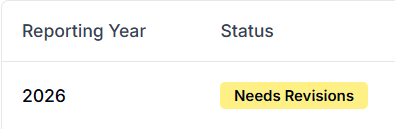 Before: an earlier reporting-status image preserved in the May 2026 correspondence. This is a historical excerpt, not a live status check.
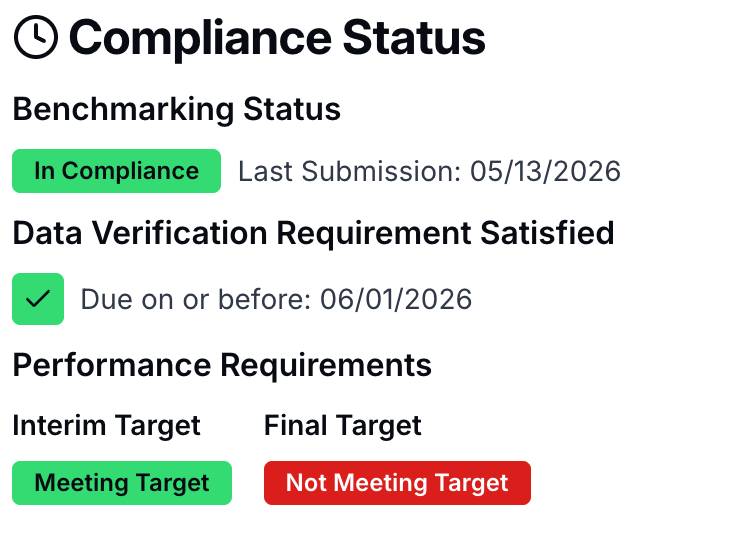 After: the May 2026 record shows reporting and verification resolved. It also shows a remaining final performance target gap. These status-only excerpts omit the building’s identifying and energy data.
Why it matters: Correct reporting gave the owner a reliable starting point. The audit then addressed the remaining performance work. The change in reporting status is not a claim of retrofit energy savings.
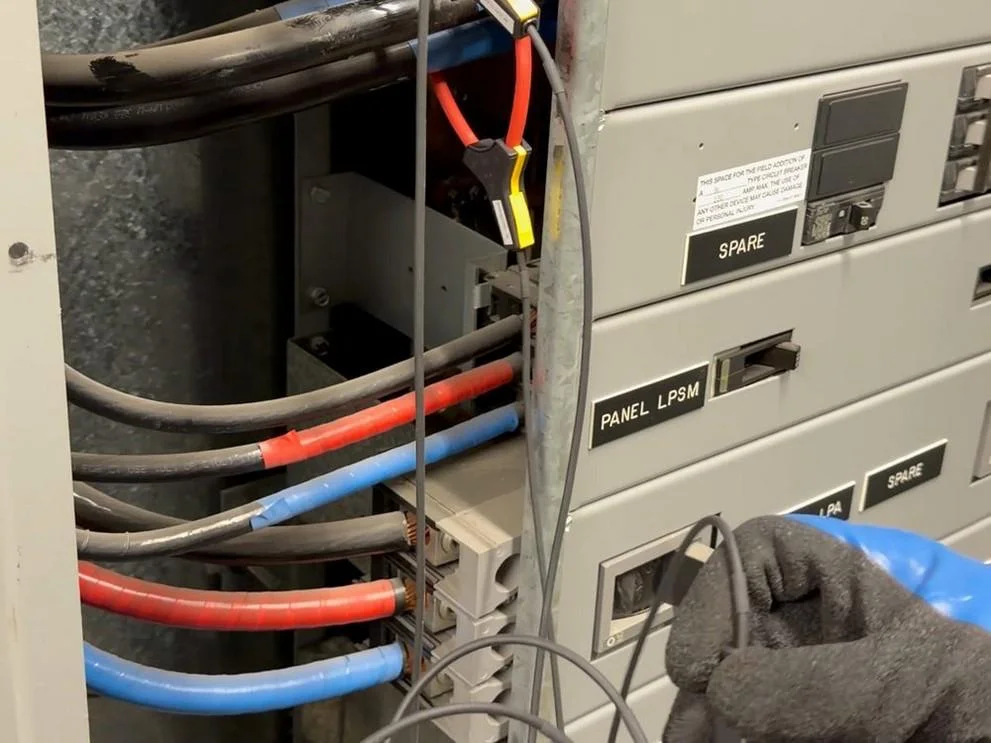 From the audit record: temporary electrical measurement helped connect the desk review with site evidence. Electrical fieldwork is undertaken by qualified personnel.
02 · Mixed-use building — a target aligned with the property
The challenge: Different tenant uses and operating patterns needed to be reflected accurately in the property record before the owner committed to upgrades.
AIM’s work: AIM reviewed utility records and building characteristics, prepared target-adjustment and verification documentation, and followed up with Energize Denver. Inspections of rooftop equipment and electrical systems informed the subsequent Level 2 audit.
The result: Denver approved the target adjustment and data verification in June 2026. The September audit documented performance below the approved targets at that time and identified practical operating improvements.
Why it matters: An accurate target changed the basis for investment decisions. This was an approved adjustment supported by building evidence, not a promised shortcut or a guarantee of future-year compliance.
03 · Small nonprofit building — lighting approval confirmed
The challenge: The organization needed to verify its lighting and complete the Energize Denver small-building process.
AIM’s work: AIM coordinated the site review, prepared LED verification records, assisted with the attestation and followed up after submission.
The result: In August 2026, the City confirmed that the lighting form had been reviewed and approved. Its notice stated that the building met the small-building performance requirements, with no further action required for that determination.
Why it matters: The owner received a written decision. A filed form alone would not have established that outcome. The determination concerned this program’s requirements, not every building-code obligation.
Read the small-building compliance guide for the broader pathway options.
Beyond Denver: three Colorado owner decisions
These projects demonstrate related services elsewhere in Colorado. They are not Energize Denver approvals.
04 · Commercial property — rooftop replacement made easier to evaluate
An owner weighing aging rooftop units needed to understand reliability, capital needs and the effect on tenants. AIM brought together equipment assessment, contractor input, a Colorado C-PACE financing representative and a county rebate representative.
The work produced partial- and full-replacement financing scenarios using full project costs. Potential rebates were not deducted as though cash had already been received. The owner continued evaluating equipment life and tenant costs in October 2026.
Outcome: a clearer capital decision. Financing was not documented as closed, replacements were not documented as installed, and rebates were not documented as paid.
05 · Light-industrial facility — a study that supported the owner’s timing
AIM helped the facility progress from an initial utility-program assessment into a building equipment and electrification study. The team coordinated access, contractor quotations and replacement alternatives, then delivered its study in August 2026.
The initial Efficiency Works assessment and AIM’s subsequent study were distinct contributions. By October, management had chosen to defer replacement.
Outcome: a delivered study and an informed decision. A useful energy audit helps an owner assess timing as well as technology. This case does not claim installed upgrades, realized savings or paid incentives.
06 · Mountain hospitality property — a waiver carried through review
A state benchmarking waiver request needed stronger documentation. AIM organized occupancy and closure evidence, responded to the reviewer’s request and continued following up until a formal decision arrived.
Outcome: a state benchmarking waiver approved in October 2026. The approval had a defined validity period and retained a separate fee requirement and future reporting or waiver obligations. It was not a permanent exemption or evidence of full compliance with every requirement.
One additional example: AIM’s own Colorado facility received EV-charging rebate approval after final project documentation and follow-up. That supports an incentive-administration story; the approval notice alone does not establish receipt of funds. It is an AIM facility project, not a third-party client engagement.
What a useful energy audit and compliance service connects
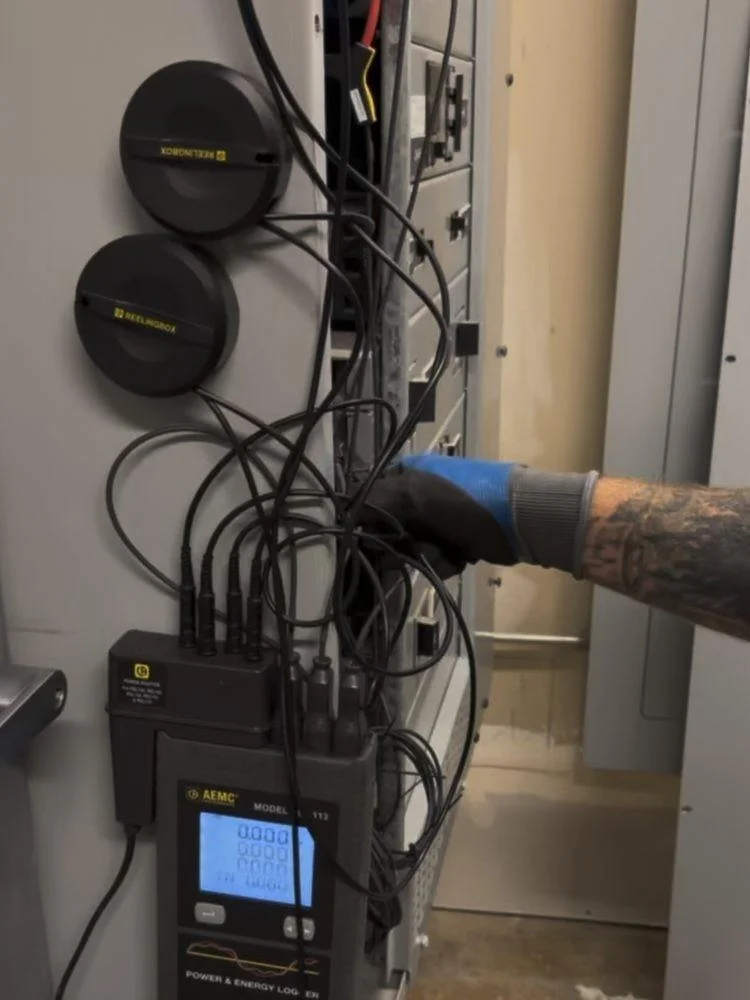 Real audit fieldwork: a portable energy logger supports temporary measurement. This photo illustrates the measurement step; it does not represent a permanent installation or verified retrofit savings.
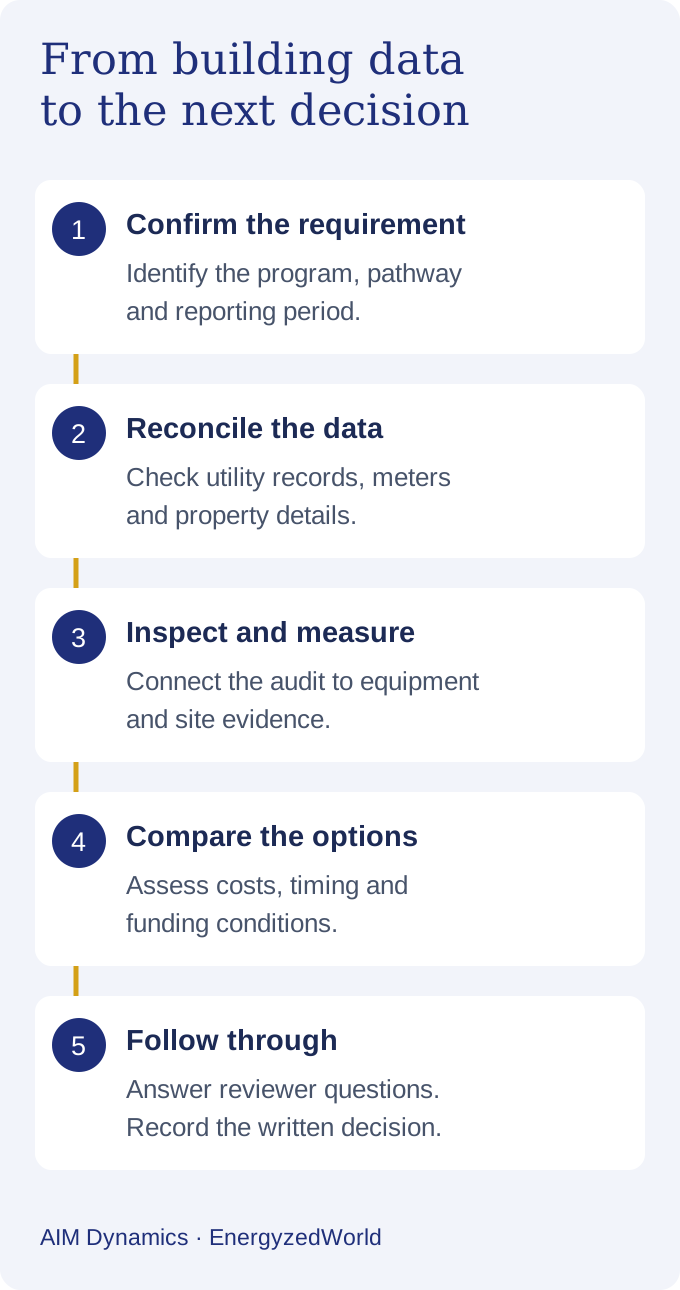
The repeated value across these projects is continuity. A utility-data question can affect a target. A target can affect the audit scope. Equipment findings can affect replacement timing. A financing assumption can change the owner’s decision.
For a building owner comparing Denver energy-audit and compliance consultants, ask for these deliverables:
- A defined scope: the program, reporting period, required submission and intended decision.
- A traceable building record: utility-data reconciliation and documented property assumptions.
- Site evidence: equipment observations and measurements appropriate to the audit scope.
- A decision-ready report: measures, cost assumptions, priorities and any remaining uncertainty.
- Follow-through: responses to review comments and a clear record of what was submitted, approved or left outstanding.
AIM’s documented work spans these steps: benchmarking and verification support, ASHRAE Level 2 audits, lighting compliance documentation, building studies and equipment-funding coordination. The appropriate combination depends on the property.
Field note
Across the reviewed projects, the decisive step was often the work between submission and decision: reconciling a bill, explaining an operating condition, supplying missing evidence or answering a reviewer. In the equipment studies, success sometimes meant giving the owner a sound basis to wait.
That is the practical standard used here: show what the evidence established, then make the next decision easier. Recommended savings remain recommendations until implementation and verification establish the result.
Get help with your Colorado building
Start with the building, the notice and the decision you need to make. Have the property address, approximate floor area, recent utility records and any program correspondence available for a private project discussion.
- Understand the record: Check published Colorado building information.
- Discuss the work: Contact AIM Dynamics for energy audits and compliance support, or call (303) 772-6100.
- Explore funding leads: Colorado commercial energy rebate and financing finder. Program matches require project-specific verification.
- Use official guidance: Energize Denver Navigation Center.
AIM can help define the next step—from benchmarking corrections and energy audits to lighting documentation and implementation planning. The responsible City, State or incentive program determines approval.
Sources
The case outcomes come from project reports, regulator correspondence and delivery records reviewed on October 9, 2026. Those private records are retained outside this public article. Photographs and status excerpts come from the underlying project records; no client report or correspondence is downloadable here.
Public program and service references:
- Energize Denver Navigation Center — official program entry point and building-size pathways.
- Energize Denver Performance Lookup — public records for large buildings.
- Denver checklist for accurate energy-efficiency targets — property and energy-data checks.
- Colorado Energy Office: Building Performance Colorado — state program information.
- AIM Dynamics Energy Services — service scope and contact route.