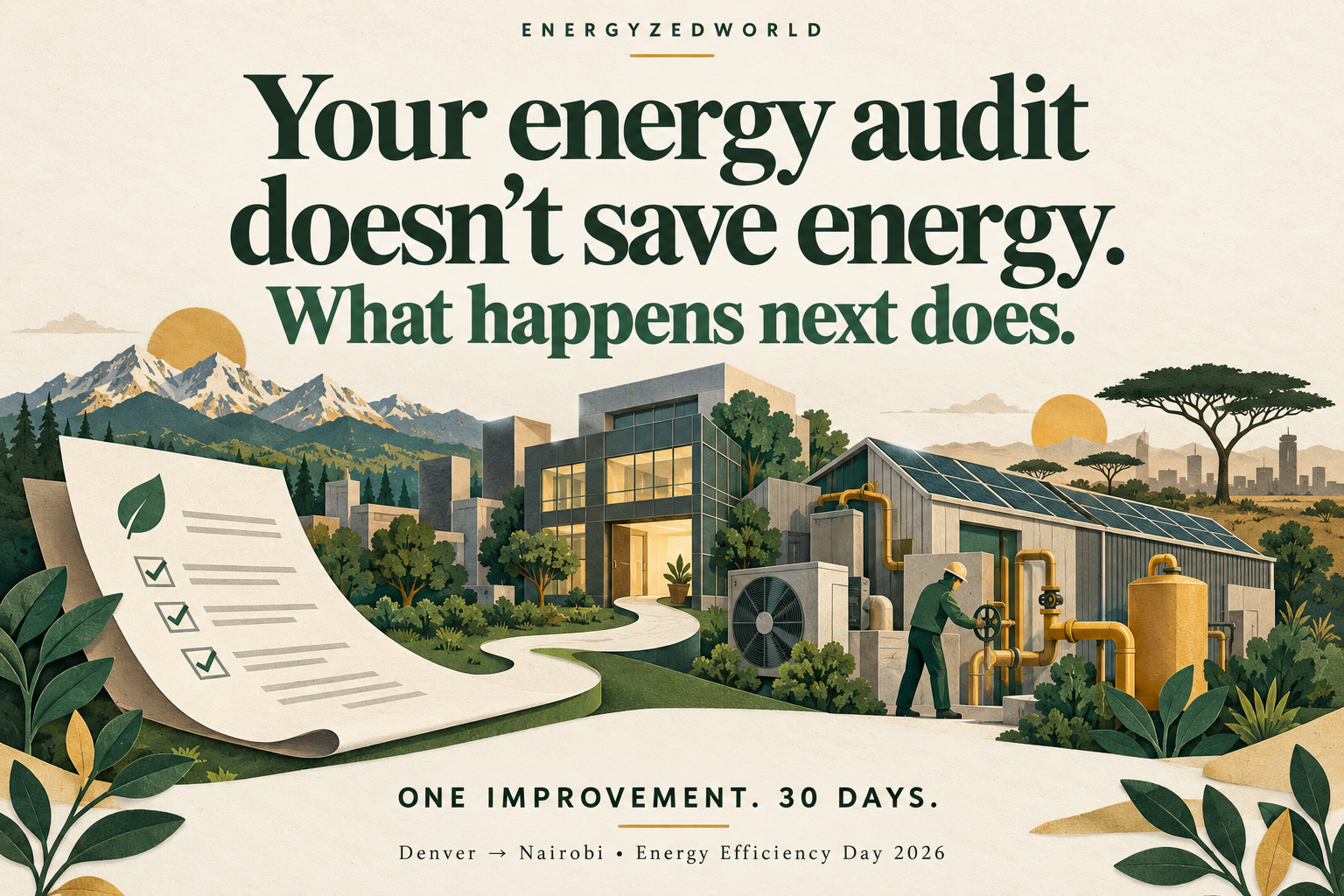
Original AI-generated conceptual illustration for EnergyzedWorld. Not a photograph of a customer facility or a measured project result.
An energy audit sitting in a folder saves nothing.
The savings begin when someone changes a schedule, repairs a leak, improves a control sequence—or approves the investment that has been waiting for a decision.
That is my challenge this Energy Efficiency Day: choose one improvement you can put into operation within 30 days. Give it an owner. Set a date. Decide how you will check the result.
October 7 marks the U.S. observance of Energy Efficiency Day. Its practical message travels well beyond the United States: use energy more effectively while delivering the services people need.
As founder of Eenovators and Business Development Engineer at Aim Dynamics in Colorado, I approach this through an engineering and business lens. From Denver to Nairobi, a useful project connects equipment performance with cost, comfort and continuity.
Start with operating schedules, HVAC, compressed air or hot water. Assign responsibility, implement a manageable change and review the evidence. An audit identifies opportunities; implementation delivers the benefit.
Four developments worth taking into the plant room
The business case extends beyond the bill. The IEA’s report published June 26, 2026 highlights productivity, product quality, maintenance and working conditions. Its guidance connects efficiency with priorities such as reliability and reduced downtime. Ask what operational problem the project solves alongside its energy case; avoid counting the same benefit twice. IEA business-benefits report.
Timing matters too. The IEA’s 2026 demand-flexibility assessment describes how responsive loads can support reliability and renewable integration. Efficiency reduces energy needed for a service; flexibility changes when demand occurs. Moving water heating outside a costly peak may reduce a bill without reducing total kilowatt-hours. Check the tariff and operating requirements. IEA demand-flexibility assessment.
Heat pumps need a site-specific case. The Heat Pump Monitor 2026 reports that global building heat-pump sales stabilised in 2025, continuing into early 2026. It highlights opportunities involving thermal storage and controls. Assess climate, required temperatures, seasonal performance, fuel and electricity prices, electrical capacity and maintenance support before selecting equipment. IEA Heat Pump Monitor.
Kenya’s cooling challenge is growing. The IEA’s September 25, 2026 assessment identifies warming and heat risks as drivers of greater air-conditioning demand. Nairobi and the coast have different conditions. My practical takeaway: consider shading, building fabric, ventilation and efficient equipment together before buying more cooling capacity. IEA Kenya assessment.
Five places to look for your first improvement
Match operation to actual use
Compare equipment schedules with occupancy and production, including weekends and holidays. Ask why overrides exist before removing them. Test adjustments against service requirements.
Restore airflow and control
Inspect filters, coils, dampers and sensors. Investigate simultaneous heating and cooling. Preserve ventilation, humidity and process requirements when changing settings.
Follow the air to its use
Investigate leaks, unnecessary hours and inappropriate applications. After repairs, confirm that compressor controls convert reduced air demand into lower electricity use. Explore our compressed-air guide.
Check demand before replacement
Review insulation, distribution losses and circulation schedules. Assess heat pumps or recovery against temperatures, hygiene, installation and lifecycle costs.
Reduce avoidable loads before sizing solar
Size against the facility you intend to operate after feasible improvements. Include daytime demand, electrification plans, seasonal use and export arrangements. Annual electricity consumption alone does not determine the right system size.
Connect the readings to a decision
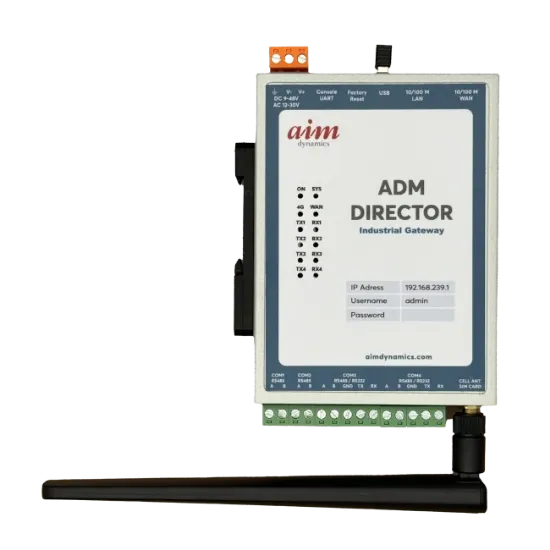
The ADM Director connects compatible meters to a self-hosted monitoring portal. The practical question comes first: which load do we need to understand?
Make compliance support improvement
Colorado’s HB25-1269 updated state benchmarking and building-performance requirements. Assess these separately from the city’s Energize Denver programme. Confirm the obligations for the specific property before setting an investment timetable.
Kenya’s gazetted Energy (Energy Management) Regulations, 2025 connect audits with implementation. Regulation 5 designates commercial, industrial or institutional facilities consuming more than 180,000 kWh of thermal and electrical energy annually. Requirements include audits at least every four years, investment plans and annual implementation reporting.
Regulation 10 requires at least 50% of recommended energy savings within three years of submitting the investment plan. That does not mean halving total facility consumption. Connect the compliance calendar with maintenance and capital planning.
Your next 30 days
Baseline
Gather utility history, interval data and operating records. Confirm meter boundaries and significant loads.
Walk
Inspect with an operator. Compare what runs with what is needed. Revisit existing audit recommendations.
Implement
Assign an owner. Agree the budget and constraints. Record original settings and complete one manageable change.
Review
Check consumption and operating feedback. Record findings, uncertainties and the next review date.
Use enough historical data to understand seasonal patterns; one week does not establish an annual baseline. For a large project, complete a defined enabling step rather than rushing procurement. Our guide to effective energy audits explains how site assessment and follow-through connect.
Prove the result before scaling it
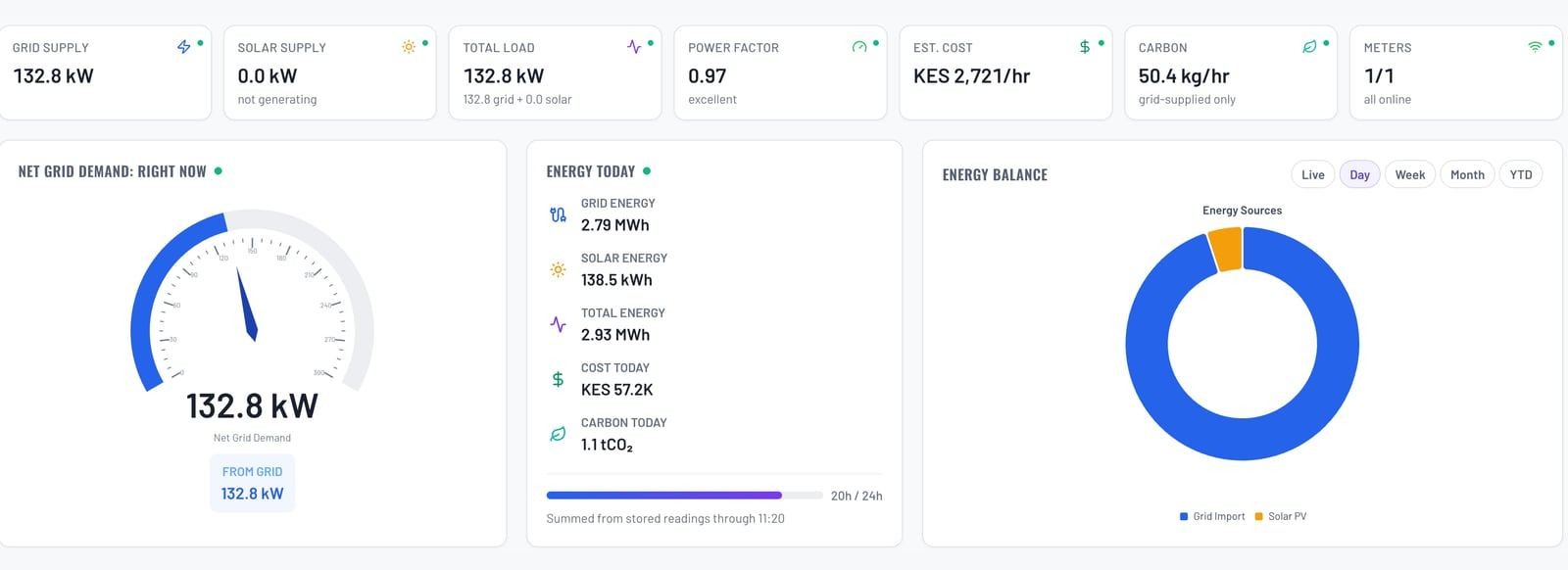
Monitoring enables decisions. It does not save energy by itself.
Compare consumption against a baseline adjusted for relevant weather, occupancy, production and operating hours. A quieter production month can consume less without becoming more efficient.
Keep the outcomes separate: energy avoided, cost under actual tariffs, emissions calculated with stated factors, and demand reduced or shifted. Check comfort complaints, maintenance and interruptions too.
Thirty days should produce accountable progress. It may not establish annual savings. Label short-period findings as preliminary and keep tracking. Our 2026 energy-efficiency investment report review explores the financial discussion.
Three questions owners ask
Do I need a new platform first?
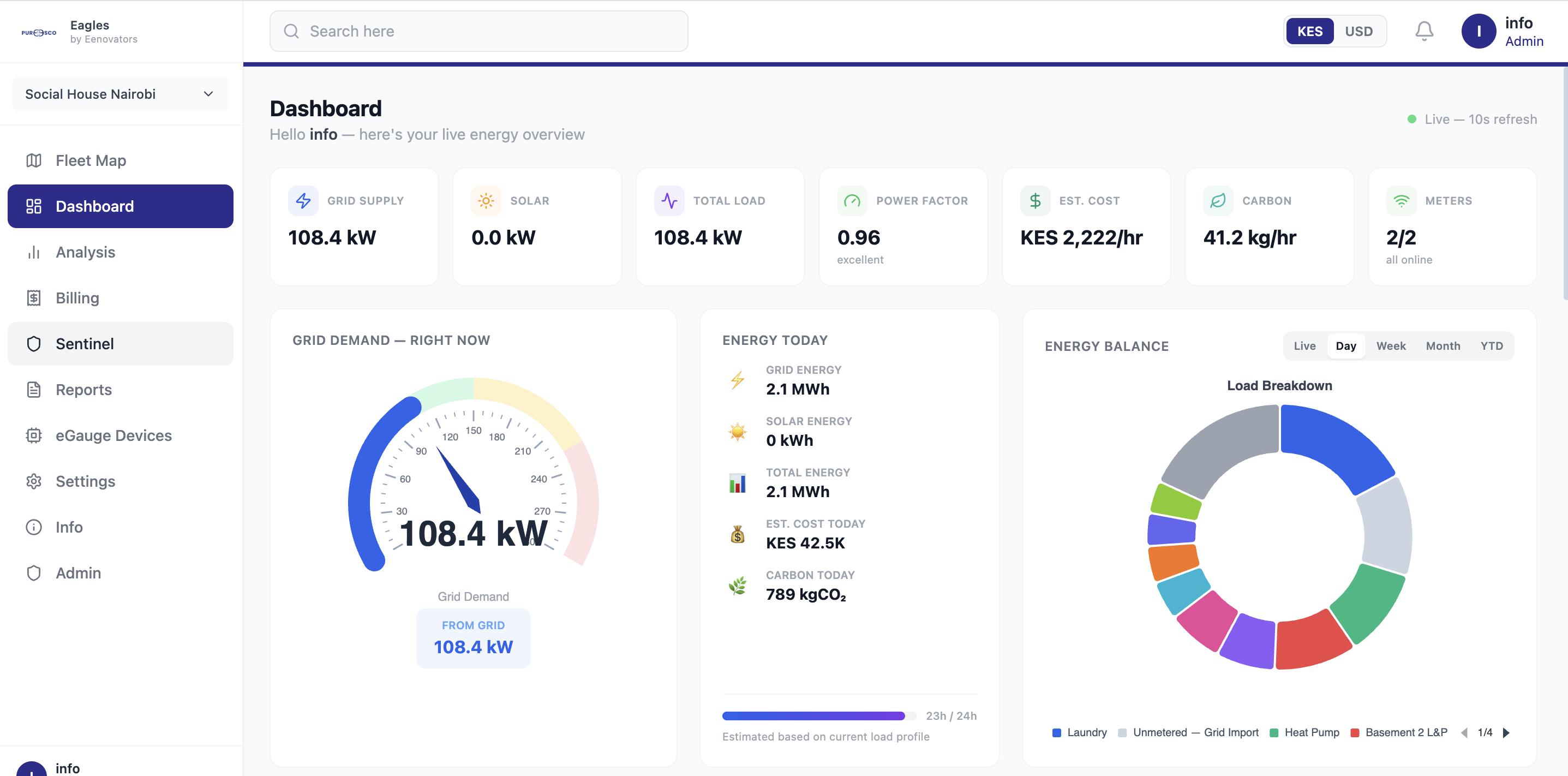
Often, existing bills, interval data and control records can support an initial review. Add measurement where a specific decision needs better evidence.
Efficiency or solar first?
Assess them together. Account for feasible load reductions before final sizing, alongside electrification and business growth.
Will a rebate fund the project?
Confirm eligibility, funding, technical requirements and any preapproval conditions before committing expenditure. Avoid treating an incentive as guaranteed.
Choose the first improvement
In Colorado, explore Aim Dynamics’ monitoring and verification options. For East African facilities, Eenovators’ energy-services team can help scope next steps. Start with your location, operating challenge and available energy records.
Disclosure: I work with both organisations. The product images illustrate tools that can support the process; they do not establish or guarantee savings.
One improvement. One owner. One review date. That is a useful way to carry Energy Efficiency Day into the rest of the year.