Some sustainability projects are big capital plans. Others are almost comically ordinary: a box arrives, the water valve is closed, the old fixture comes out, a new fixture goes in, and every flush uses less water from that day forward.
That was the story at Aim Dynamics in Longmont, Colorado.
After qualifying for Bronze Certification through the City of Longmont Sustainable Business Program, Aim Dynamics received high-efficiency toilet fixtures and replaced an older 3.2 gallons-per-flush toilet with a 0.8 gallons-per-flush model.
Watch the short video here: Aim Dynamics toilet water-savings field story on YouTube.
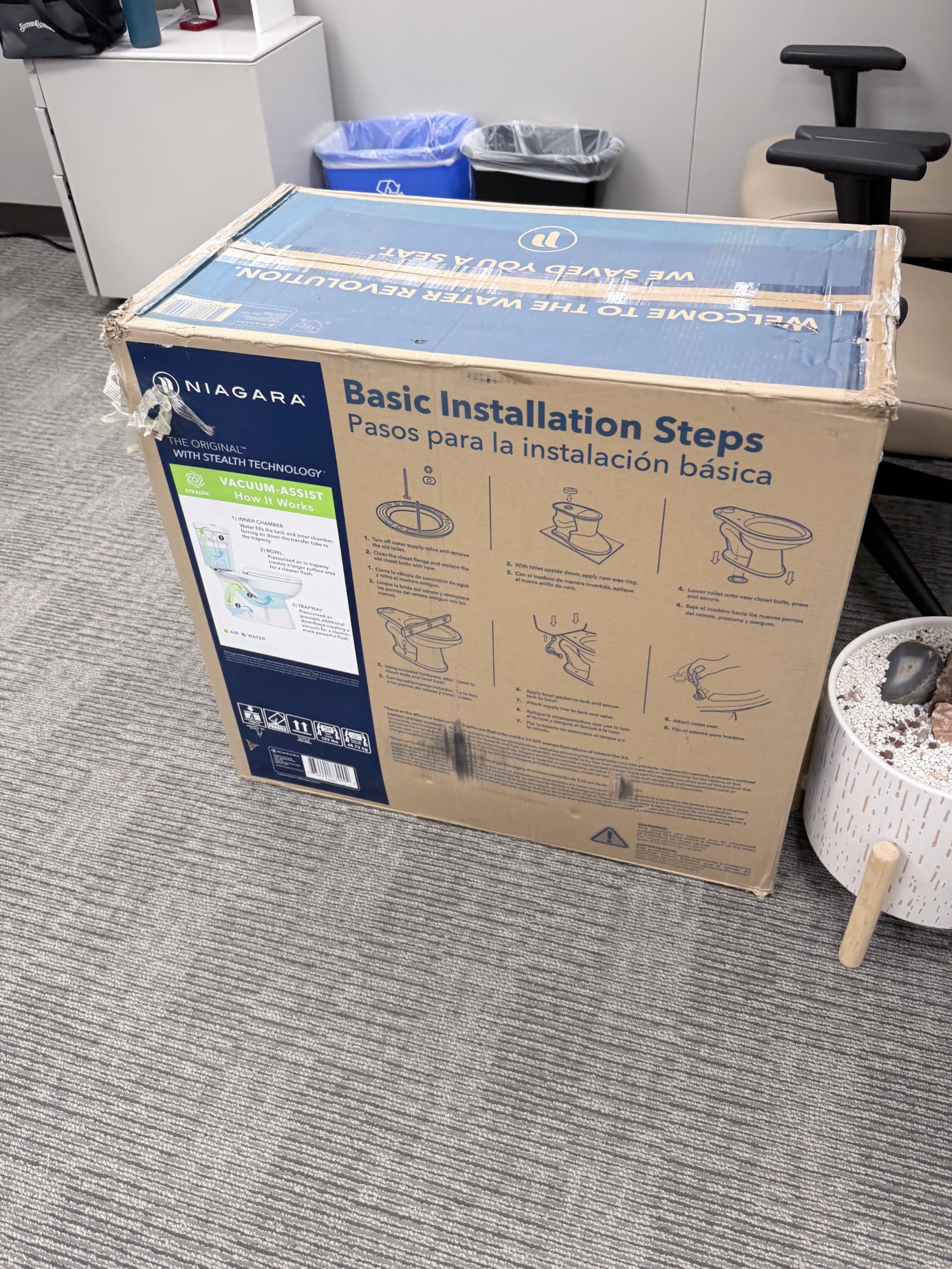 The upgrade began with the most practical sustainability moment possible: the new high-efficiency toilet arriving in a box.
The savings math
The calculation is deliberately simple:
| Item | Calculation | Result |
|---|---|---|
| Water saved per flush | 3.2 GPF - 0.8 GPF | 2.4 gallons |
| Daily use assumption | 10 people x 2-3 flushes | 20-30 flushes/day |
| Daily water savings | 20-30 x 2.4 gallons | 48-72 gallons/day |
| Annual water savings | 48-72 x 365 | 17,520-26,280 gallons/year |
That is the point: a fixture change that takes roughly an hour can remove tens of thousands of gallons of unnecessary annual water use from a small office scenario.
This is not a metered utility-bill baseline. It is a transparent fixture-rating estimate. But for planning and education, it is a powerful little number.
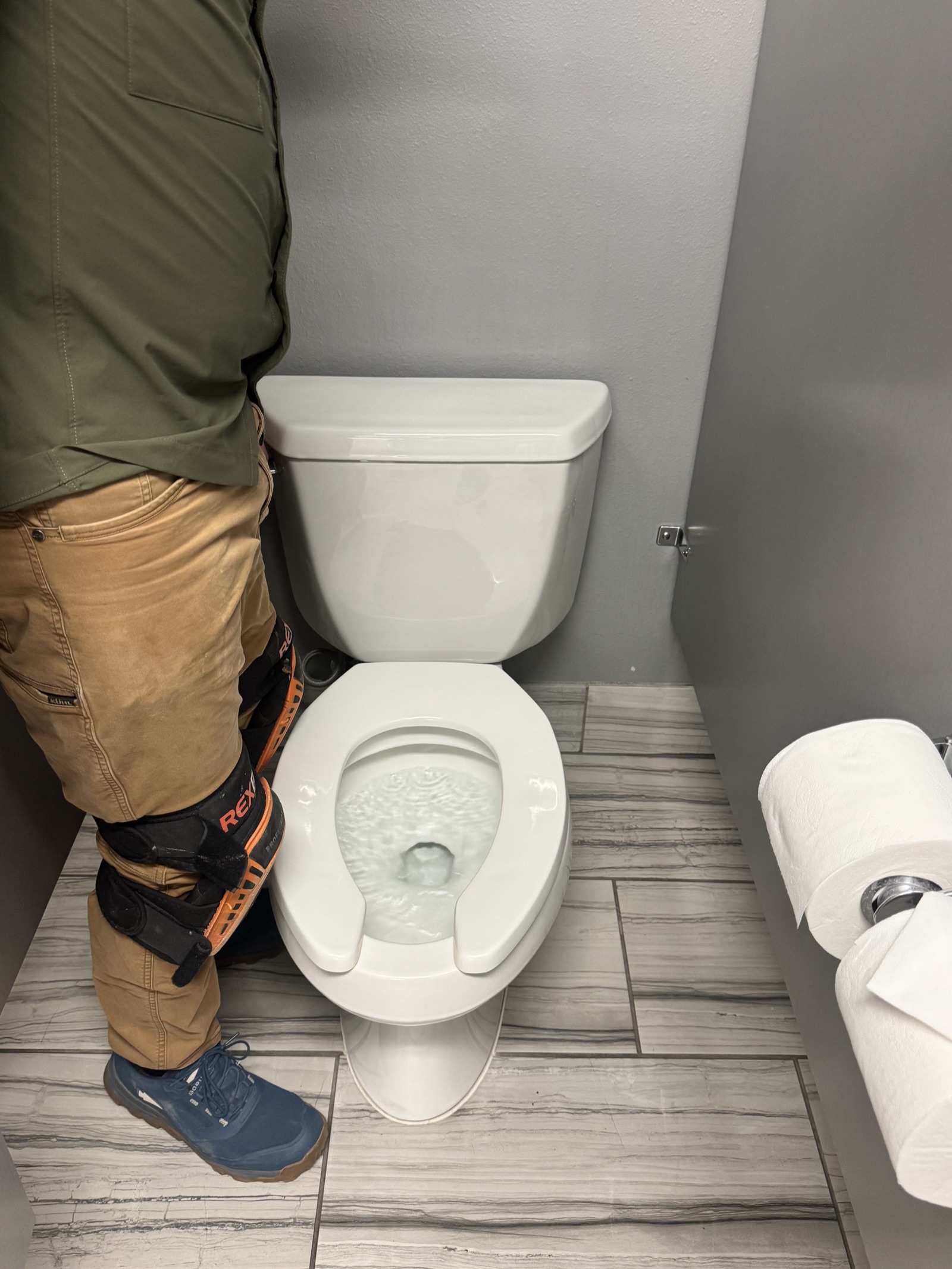 Before: the older 3.2 GPF toilet. Every flush used four times the water of the new 0.8 GPF fixture.
Why this matters in Colorado
Colorado water is not abstract. Longmont’s drinking-water supply is surface water from streams, lakes and reservoirs fed by snowmelt and rainfall in the St. Vrain watershed, with additional west-slope Colorado and Fraser River sources. The state also has a dry, drought-prone climate; Colorado averages about 15 inches of precipitation annually, and large parts of the state receive less than 10 inches.
That makes indoor water efficiency a resilience issue, not just a green badge.
Toilets are also one of the most visible places to start. The U.S. EPA WaterSense program notes that toilets account for nearly 30% of average household indoor water use. A commercial office restroom is not a household, but the lesson carries: if a fixture is used many times per day, each flush matters.
The installation story
Jarrett handled the installation, and he made the point better than any slide deck could: this is an in-and-out upgrade. Close the valve. Pull the old fixture. Prep the flange. Set the new one. Test the flush.
About one hour per toilet.
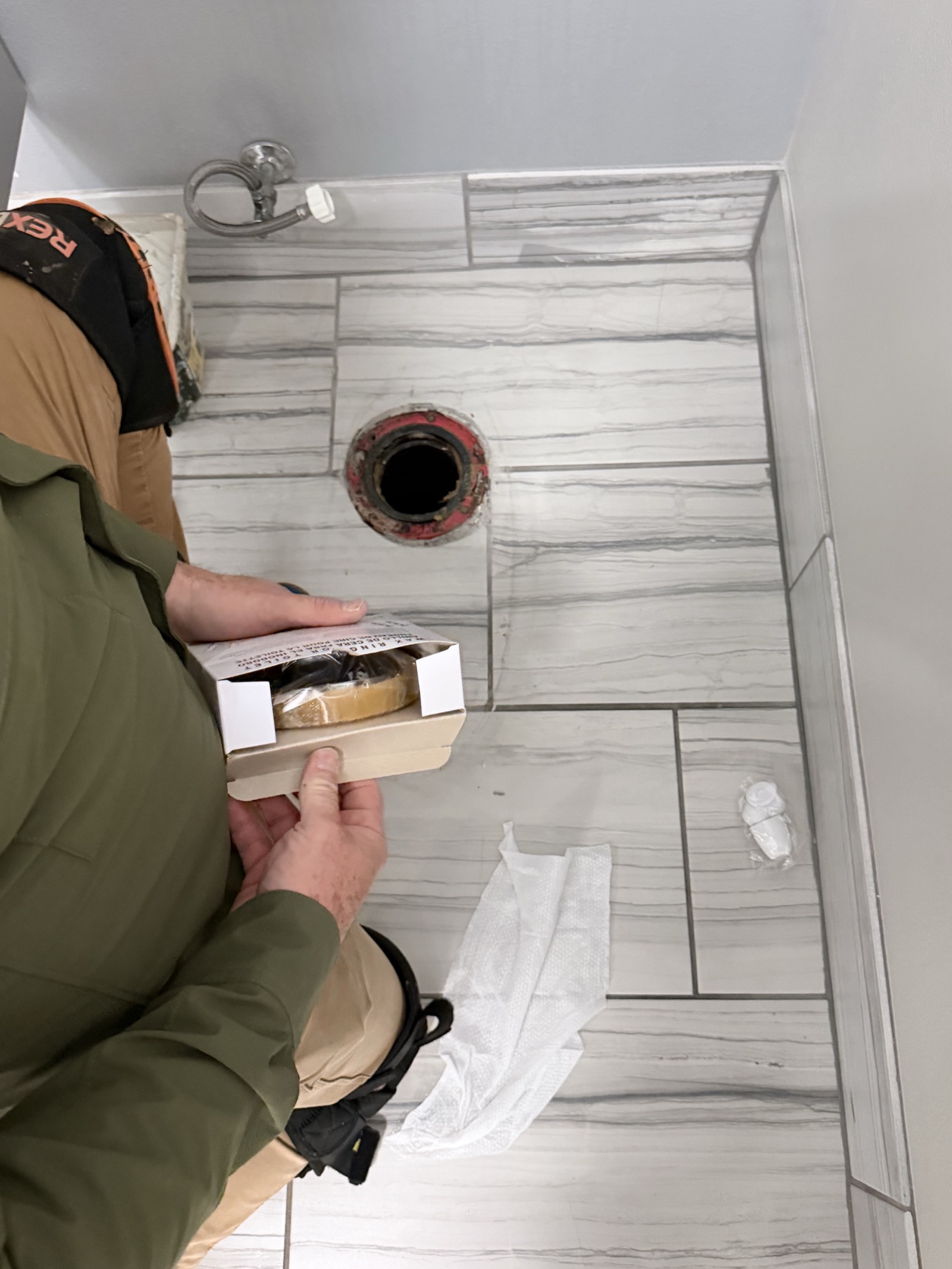 The middle of the job: old fixture out, flange exposed, new wax ring ready.
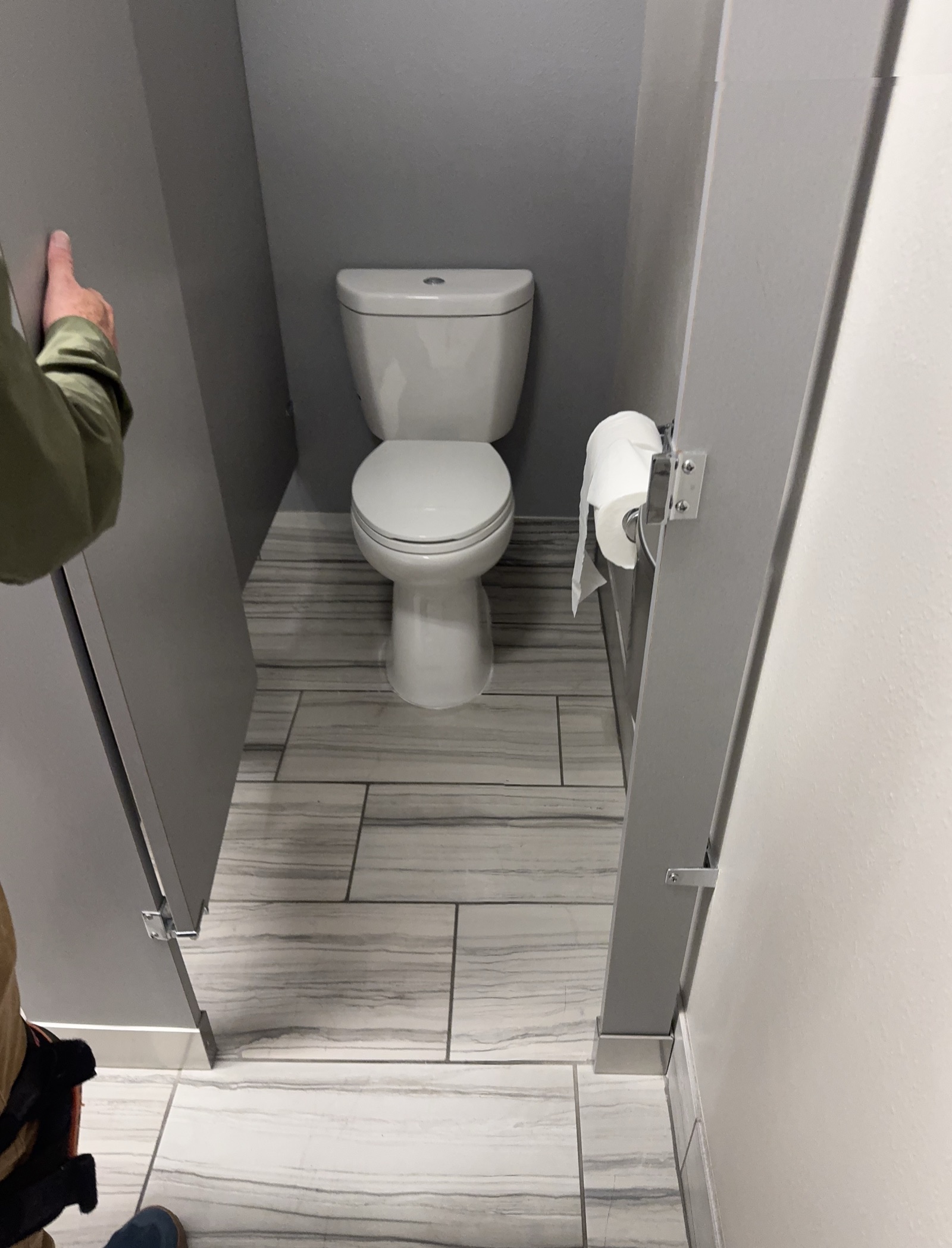 After: the 0.8 GPF fixture installed and ready for the first real flush.
The bigger lesson
The best sustainability stories are not always glamorous. Sometimes the win is a small operational change that is easy to explain, easy to verify and easy for another business to copy.
For Aim Dynamics, this project turned recognition into action:
- Bronze Certification from Longmont’s Sustainable Business Program
- A practical fixture upgrade
- A documented before-and-after story
- A conservative water-savings estimate
- A short video that other businesses can learn from
 Done: Chris from Aim Dynamics with Jarrett after a smooth one-hour installation.
Small changes add up. Measure it. Make the change. Save every flush.